

Although Kallup McCoy literally ran from North Carolina to Oklahoma, Facebook is what brought him to Guthrie.
In 2018, McCoy wanted to participate in the Remember the Removal bike ride, a journey along the Trail of Tears created by the Cherokee Nation. He was denied access because of a felony on his record, a scar from 14 years of opioid addiction.
Since he couldn’t ride the route, McCoy was determined to run it on his own. McCoy did so, running over 1,200 miles over 40 days. Guthrie High School track coach Lisa Reece took notice and followed along with McCoy’s incredible journey.
“I heard about him running the Trail of Tears… and I actually reached out on Facebook messenger, and then we started communicating that way,” Reese said. “I just kind of started following him and watching where he spoke at schools and different things about his addiction and recovery. It just kind of hit home to me because I’ve been through a lot with my family, and we just became friends.”
Reece invited McCoy out to the high school last week to speak with a large group of students.
“I came in and spoke to some students, sharing my story about overcoming drug addiction (and) about the importance of surrounding yourself with positive people,” McCoy said. “That’s going to help you make good decisions. That’s going to help you get to your God-given purpose and destiny.”
Guthrie track senior Mason Barney enjoyed hearing McCoy’s message.
“It was very good,” Barney said. “There were a lot of people there that he definitely reached out to definitely needed that. It was worth his time and worth everybody else’s time.”
Once he finished speaking, McCoy changed into his spikes and crossed the street to the track. He worked out with the Guthrie boys’ track team, which was preparing for the state championship.
“I was just trying to keep up with Mason, he’s really fast,” McCoy said. “I knew if I could just keep up with him, I was doing good.”
Guthrie coach Clay Tarter said he had never met McCoy before, but immediately recognized the impact McCoy had on the team.
“I think it was good for the kids,” Tarter said. “Any kind of story, they see a life changing story, and that was a life changing story for him what he’s gone through and so forth. It has an impact on kids.”
Tarter was often impressed with the pace of the team after looking down at the stopwatch he carried in his right hand. He said having an elite runner striding side by side with the team motivated them.
McCoy said he also had a little extra juice in his legs and ran his fastest mile in 18 years.
“Iron sharpens iron,” McCoy said.
McCoy was a full participant of practice, from the warmup laps to the postrun ice bath.
“(Running with the team) was awesome,” McCoy said. “I was not expecting to come out here and put in work like this, and then the ice bath, that was torture. I’m not going to lie, that’s tough. That was tougher than running the mile.”
Walking, stretching and standing huddled in a bucket of ice water gave him time to invest further in the track team.
“We were just kind of talking about what we’ve been doing,” Barney said. “What our goals are, what we’ve been aiming for, and some things about each other like how my season has been going and his half-marathon training. It was just a lot of running and just life stuff.”
McCoy’s goal is to qualify for the 2024 Olympic Trials in the half-marathon. He keeps himself busy with training for that and working at RezHOPE Recovery and Consulting, an organization he founded along with his wife Katelynn.
“We go on mission trips around the country, specifically like Pine Ridge reservation (to) feed people that are experiencing homelessness, try to love on people and be a light to the world,” McCoy said. “We’re also working on a men’s recovery house back home on the reservation in Cherokee, North Carolina. We’ve got a lot of different things going on.”
The McCoys also host The Cherokee Plug Podcast, a platform that allows guests to share personal stories of overcoming adversity. Triumphing over difficulty is something McCoy knows all about, but he also knows just how monumental the task can be.
“That’s what connects us all,” McCoy said. “We’re either going through adversity in this moment, we just came out of adversity, or we’re getting ready to go into adversity. I think that’s important to hear because people need that hope, that motivation, that inspiration to keep fighting, and so that’s the message I try and convey.”
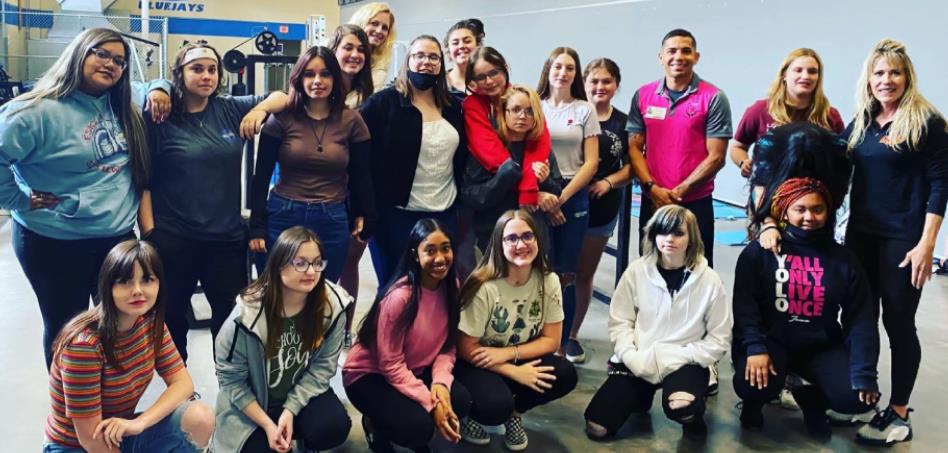
McCoy poses for picture with Guthrie students after sharing his story of overcoming opioid addiction
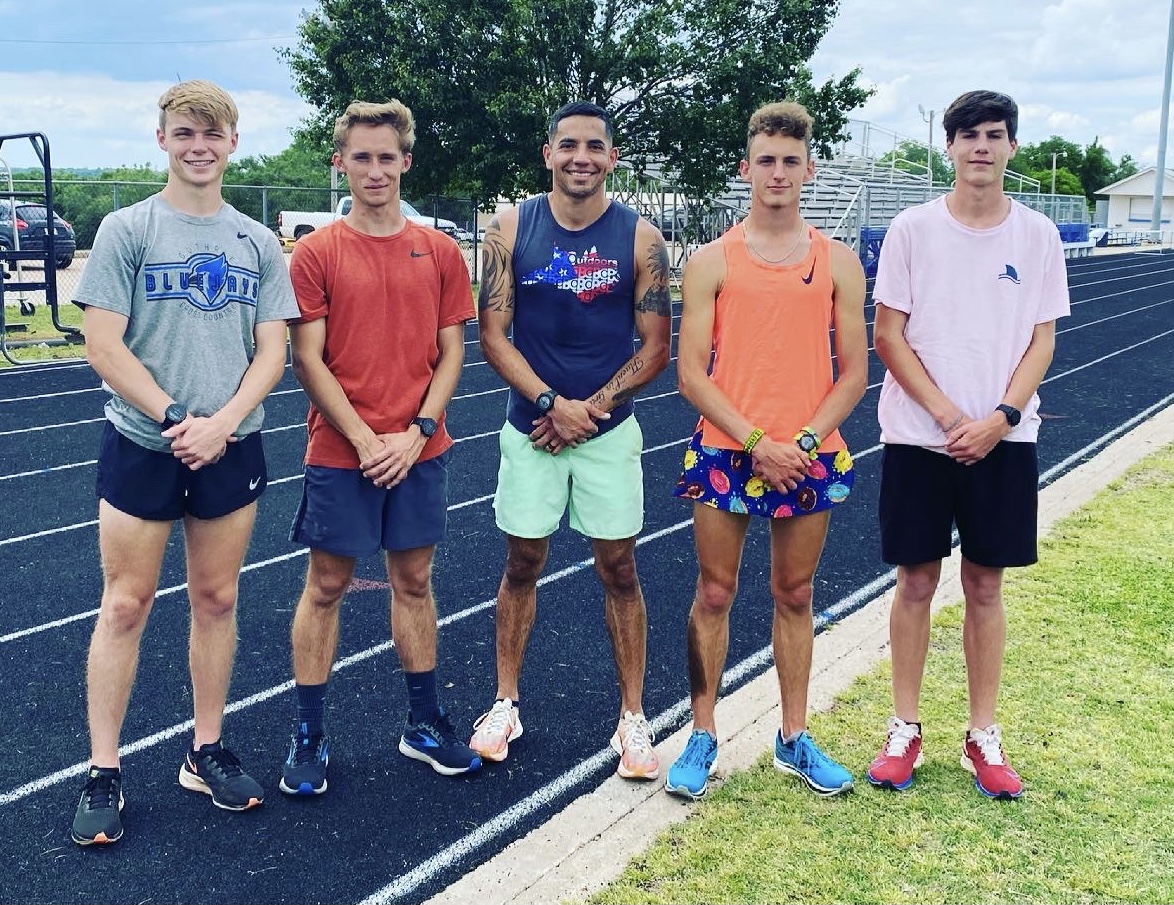
McCoy (center) stands with members of the Guthrie High School track team
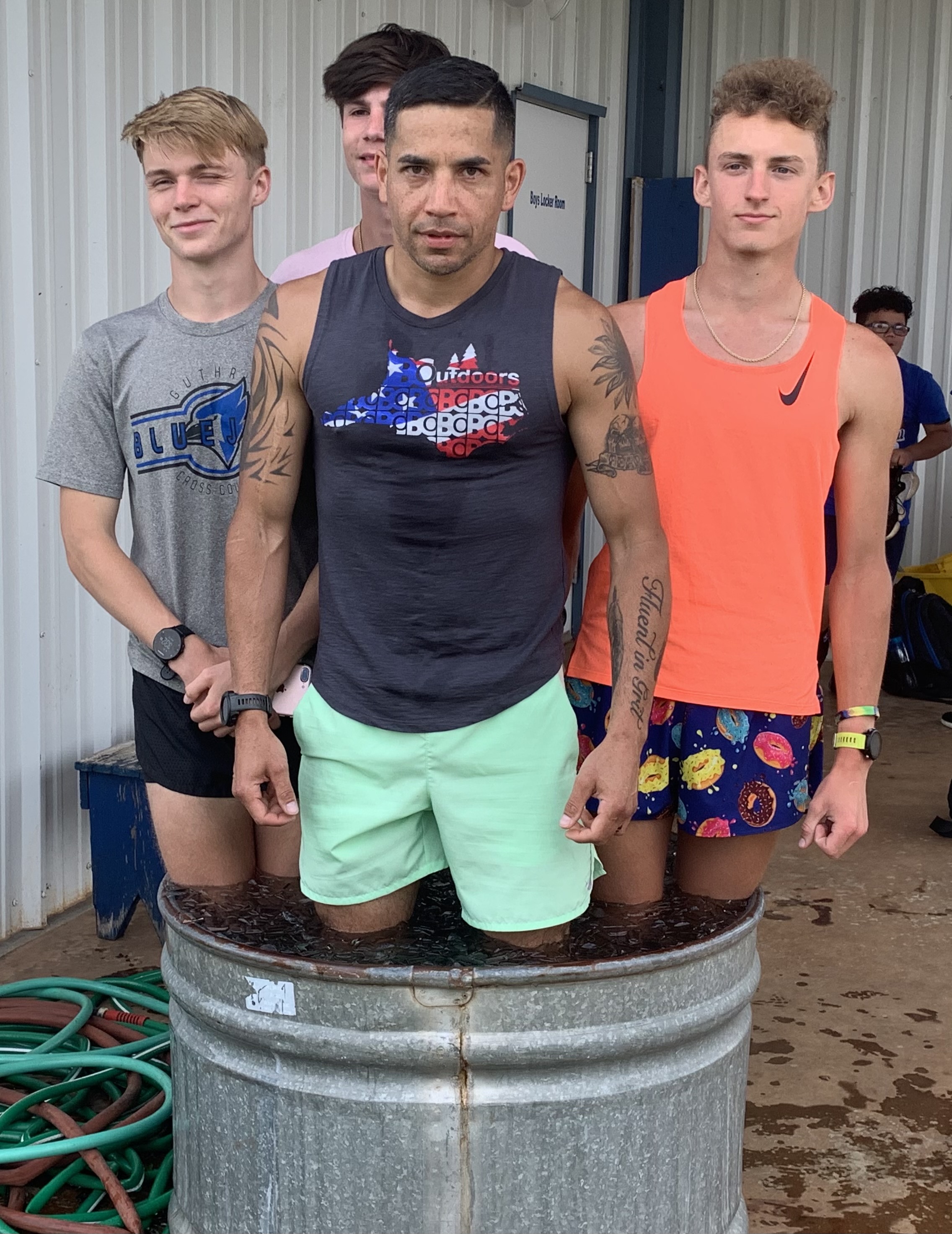
McCoy joins team in post-run ice bath
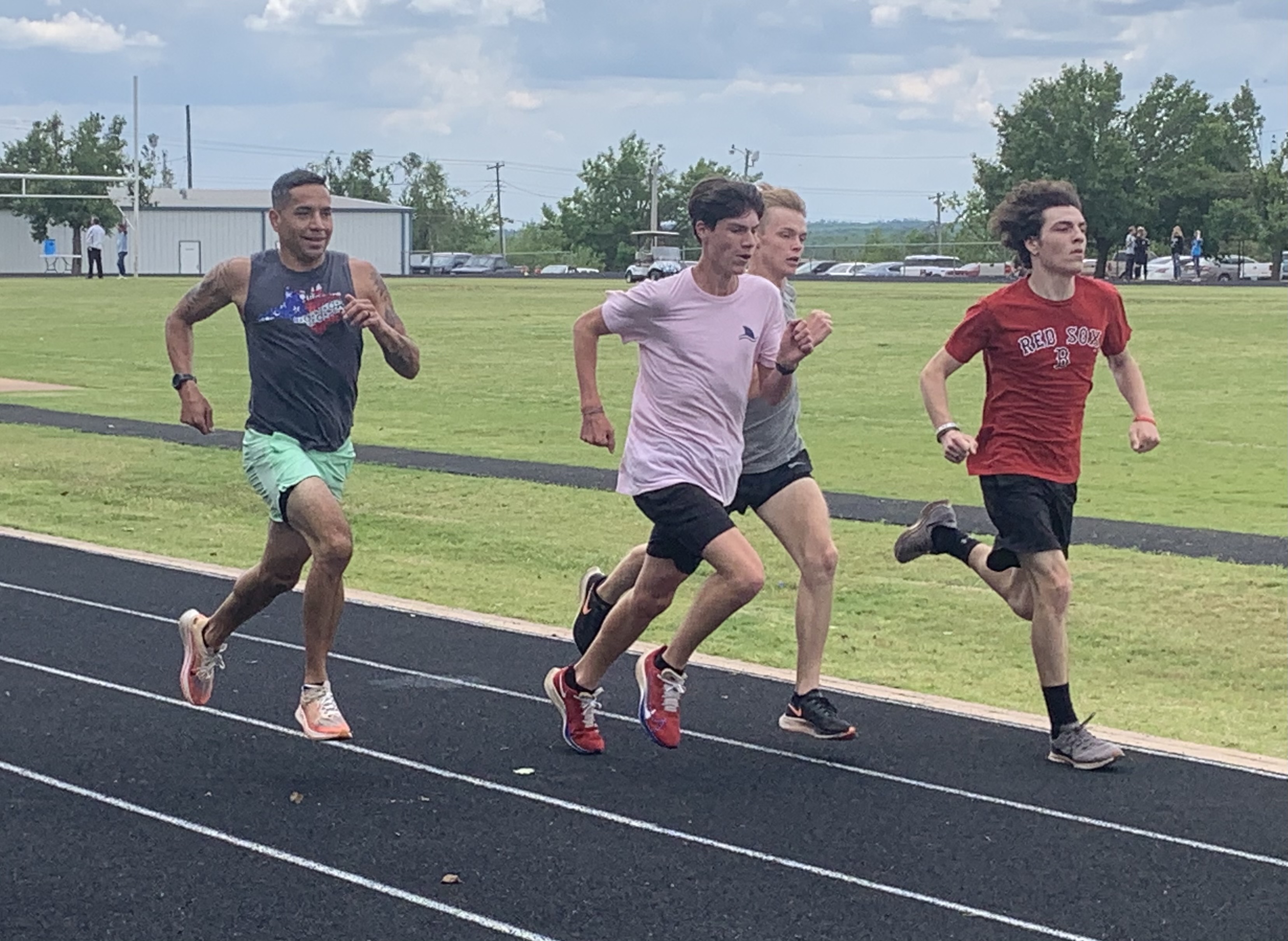
McCoy running the mile with the team